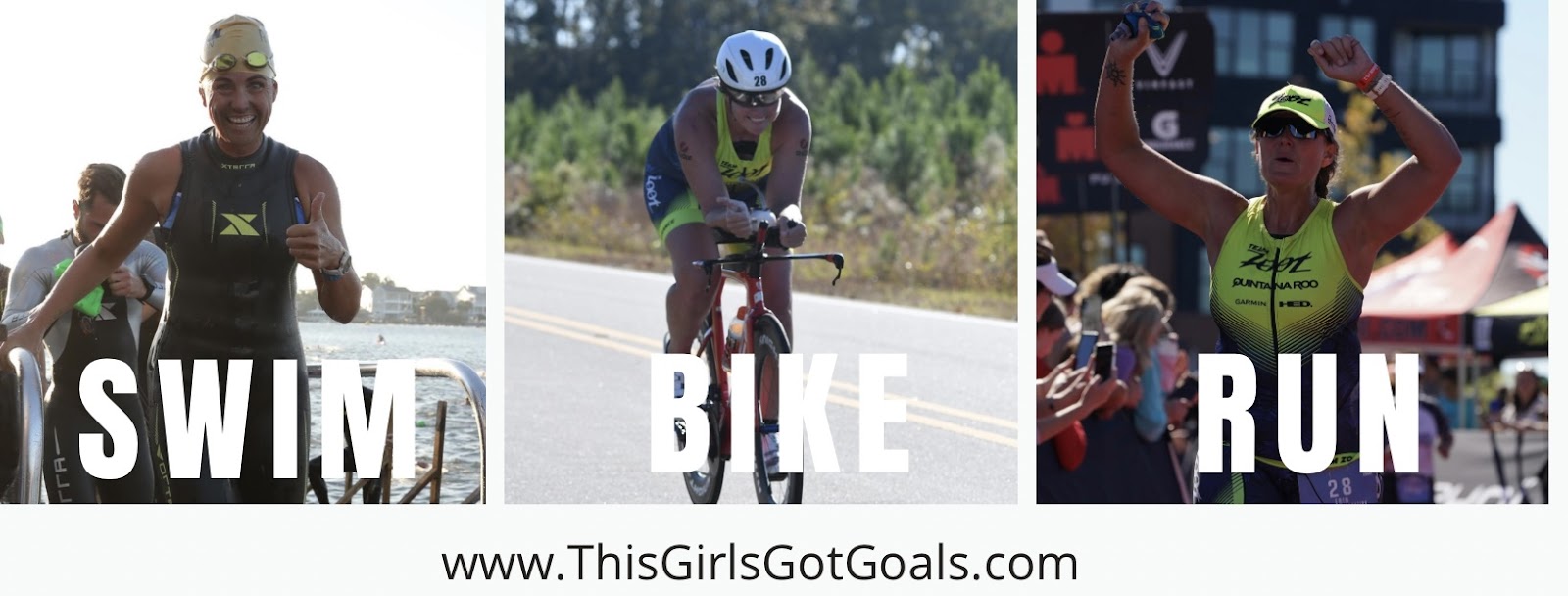

Ironman Texas 2026: Releasing the Dream
I chose Ironman Texas as a recon mission for my Kona dream.
And I left knowing it was probably time to release that dream.
When I raced Kona in 2016, I was there as the Women for Tri Kona Inspiring Woman - raising over $28,000 for Women for Tri. That experience absolutely counted, and it will always be one of the most meaningful opportunities I have had in this sport.
But there was still a part of me that wanted to go back by qualifying.
Not to prove that I belonged there. I already knew how much that first experience mattered.
I wanted to bring this stronger version of myself back to that course.
Ironman Texas felt like the right place to test whether that dream was realistic. A flat, windy bike course suited my strengths, and while I was not racing for a Kona slot this year, I wanted the information.
Could I get close?
Was the dream still something worth chasing?
I think I knew the answer before race day, but the slot allocation made it impossible to ignore. The last Kona spot in my age group went to a woman who raced around 11 hours.
I finished in 14:00:43. Even without the crash, I likely would have been somewhere in the 13:00–13:30 range. That is still two hours away from where I would need to be.
And when I am honest with myself, I do not have two hours to find.
That is hard to say out loud.
But it is also okay.
Because a dream can still matter, even if the ending is not what you hoped for. Sometimes the value is in what it pulls out of you while you are chasing it.
And this race pulled a lot out of me.

Race Week
I traveled to Texas with Miguel and Angi. We broke the drive into two days, but the first day was a big one. We drove over 13 hours so we could get there right when check-in opened.
That turned out to be worth it because I got an awesome race number and a perfect spot on the bike racks. I know that probably sounds ridiculous to anyone who has never done one of these races, but when you are about to do an Ironman, little logistical wins feel like big wins.
We did some recon in the area that afternoon, then put our feet up.
The next day we did a shakeout run and went to the orientation swim, where we learned for sure that the race would not be wetsuit legal. I also got to see my friend Chris Tubbs, who was volunteering in a kayak at the swim practice and would also be out there on race day.
Miguel and I got in a short bike ride too, although honestly, the days are already a little blurry in my mind.
I also went to the live taping of the Pro Tri News podcast. I love listening to those guys. They crack me up, and they are so personable. It was actually the third time I have seen them do a live podcast, and it was a fun little race-week bonus.
One of my favorite parts of the whole lead-in was seeing everything through Miguel’s eyes as a first-time Ironman.
I had to laugh because I think he would have bought the entire Ironman store if he could have.
But honestly, that first-timer energy is special. It reminded me of why this sport is so much bigger than race times.

My 3 Goals

As always, I went into the race with my 3 Goals.
Rockstar Goal: 13:00
This is kind of the dream Ironman time for me. I have not hit it yet, and I was not really trained up for it this time, but it was still the big stretch goal.
Super Happy Goal: 13:21
My Ironman PR was 13:22, so 13:21 would mean a new PR. This was the goal I believed I was trained to hit.
Happy Goal: Finish with a new set of amazing memories of how awesome this community is.
That Happy Goal matters.
It is not a throwaway goal.
It exists because sometimes race day takes away your Rockstar Goal. Sometimes it takes away your Super Happy Goal. And when that happens, you still need something worth fighting for.
Spoiler alert: this race was exactly why the Happy Goal exists.
Race Morning

Before the swim, I waited in the corral with Miguel.
This was his first full Ironman, and he had trained so hard to get there. We hugged, and I told him he had done the work, that this was the victory lap, and that I was so proud of him.
He told me later that it helped calm his nerves.
Honestly, it helped calm mine too.
Standing there with my friend and athlete reminded me that everyone comes to an Ironman start line with their own reason. Miguel was there to prove to himself how much he had grown. Another woman near me was racing her first full and could not wait for her kids to see her on the run course. A young woman I met at swim practice was chasing a Kona spot.
Same race.
Completely different whys.
Mine has changed over the years too. At first, it was simply to see what I was capable of. Now it is more about being fully part of this community, continuing to inspire myself, and hopefully inspiring others to #makeyourselfproud.

Swim — 1:24:10

The swim was not wetsuit legal, so I wore my speed suit. I knew that meant my swim would probably be a little slower than it would have been in a wetsuit, so my plan was to stay calm, keep good rhythm, and focus on form.
The water at Ironman Texas is very dark, and because we start so early, the sun was not really up yet. Visibility was poor.
On the way out, I had to get almost completely upright a couple of times to figure out where the buoys were.
After the first turn, heading toward the canal, the water got weird. Swirly is the best way I can describe it. I would get into a good rhythm, and then suddenly the swimmers around me would almost accordion together.
I would find myself running into people in front of me while people behind me were running into me. It got chaotic, then it would open up again, then it would happen again. I think it happened about four times.
Once we got into the canal, most of the swimmers near me were close to shore. I had read that the deepest water was in the middle, so I tried to stay more toward the middle.
There were still people walking in the canal, though, which was very strange. It is a weird feeling to be swimming while someone is literally walking next to you.
When I got out of the water, I did not know it at the time, but I was 9th in my age group out of 54 women.
That makes me very proud.
My time was longer than I would have liked, but it was a little faster than my swim time at Kona in 2016, which is the only other Ironman I have done without a wetsuit.
I will take that.
T1 — 4:10
Transition was smooth and uneventful, which is exactly what you want in an Ironman.
I was excited to get on the bike. I was also excited to wear my new TTL kit as part of Team TTL.
The temperature was great. It was not raining yet. The wind was not bad. And based on how many bikes were still in transition, I knew I had put myself in a good position with the swim.
I left T1 feeling hopeful.
Really hopeful.
Bike — 5:50:44

The first 60 miles of the bike were exactly what I wanted them to be.
My power was 165 and lower. My heart rate was in Zone 2. Nutrition was going exactly to plan. The wind was not bad at all. I had seen a little headwind and a little tailwind, but nothing that felt like a problem.
And I was moving.
When I hit the 60-mile mark before the three-hour mark, I realized I was averaging over 20 mph.
That is when I started thinking maybe 13 hours was possible.
Not just Super Happy Goal possible.
Rockstar Goal possible.
If I could keep that pace and keep the power low, maybe this could be the day.
And then, moments later, everything changed.
Mile 60.2
The crash happened at mile 60.2.
I had just passed the 60-mile mark and was still thinking about that sub-3-hour first 60 miles when I saw a young man in front of me swerving all over the road.
It was two-way bike traffic at that point. There were lots of bikes coming toward us, but as far as I could see, he and I were the only two on our side.
I went to pass him and called out, “Passing on your left.”
He turned to look at me, but not just with his head. He turned with his whole bike.
It turns out he had a flat tire. When he turned like that with a flat, he went down. I had to grab my brakes and try to steer around him, but I could not avoid it.
I ran over his bike and went down too.
It was scary.
Very scary.
Another triathlete who had been going the other direction stopped to help me get off the road. The women’s pros were coming through shortly after us, and with the pro field came motorbikes, cameras, officials, spare wheels, all of it. So he was trying to get me out of the middle of the road quickly.
My adrenaline went through the roof.
I threw up several times.
My heart rate was sky high.
My elbow took most of the hit. My knee was scuffed up a little, and my tri kit was scuffed too, but the elbow was the main issue. It bruised almost instantly and got a big goose egg right where I needed to rest my weight in the aero bars.
Thankfully, the scrapes were clean and there was very little bleeding. I actually think going down on concrete was better than blacktop.
My bike seemed fine.
That part still feels like a miracle.
The young man was bleeding from his elbow and had a flat. He was very apologetic. We were both rattled. Once I stopped throwing up and got my heart rate down, I talked to him enough to learn that this was his first Ironman and that he was going to try to continue.
He had a tubed tire setup, and I ride tubeless. He did not have a spare tube, so there was not really anything I could do to help him fix it. I think I would have stayed with him if I could have helped, but in that moment, all either of us could really do was try to get through the emotion of what had just happened.
In those first few minutes, I definitely thought my race was over.
But once I realized I was not badly bleeding, my bike was okay, and my heart rate was coming down, I knew I wanted to finish.
The Rockstar Goal was gone the second I hit the pavement.
The Super Happy Goal was still somewhere in the back of my mind.
But the Happy Goal had officially entered the chat.
Finish.
Stay strong enough mentally to finish.
Keep moving forward.

Getting Back on the Bike

When I finally clipped back in, I let myself cry.
I tried to get comfortable with the goose egg on my elbow, which was exactly where I needed to rest my weight in the aero bars. I tried to get back into race mode, but I could only hold onto it for short stretches.
Mostly, I just needed to get from aid station to aid station.
That was also when the mammogram callback I had been carrying for three weeks came back into my mind.
I have had the follow-up now, and thankfully I got the all clear. But at the time, staffing shortages meant I could not get in until after the race. I had spent the final weeks of training practicing how to push away worst-case-scenario thoughts.
After the crash, those thoughts came back.
But instead of spiraling, my brain gave me something I did not expect:
If you can finish an Ironman after hitting the pavement, you can handle whatever news comes next.
I am so grateful I did not get the worst-case news. But in that moment, before I knew the outcome, that thought helped me keep moving.
The Rest of the Bike
The rest of the bike was a roller coaster.
One minute I felt defeated and wondered if finishing was still in question. A few minutes later, I would be pushing decent power, feeling okay, and thinking maybe the Super Happy Goal was still possible.
Because my watch had stopped during the crash, I honestly did not know exactly where I was against the clock. That may have been a good thing.
I stopped at several aid stations after the crash. I needed ice for my elbow. I needed to clean it off. And honestly, I needed a gut check.
The wind picked up a little on the second loop. It was never terrible, but it was more noticeable. Since I could not comfortably stay in aero, I had to sit a little cockeyed with one elbow pulled back instead of resting in the pads.
It was not ideal.
But I kept moving.
It rained on us a couple of times, but nothing too dramatic on the bike.
And somehow, even with the crash, the stops, the vomiting, the emotional reset, and the weird position, I rode 5:50:44.
Under six hours.
I was the 15th fastest bike split in my age group.
I am really proud of that.
T2 — 9:26
The run through transition was SO LONG.
I could tell immediately that I was carrying more than the normal jelly legs that come from running after 112 miles on the bike.
I had put Tylenol in my run bag, so I took that. The volunteers in the tent helped me with a little first aid on my road rash using Vaseline and ice.
I sat down to put on my shoes and took much longer than I would have if I had still been in a race mindset trying to hit my goals.
My back was a little achy, but when I took those first steps of the marathon, I was still running.
And I thought I could still have a good showing.
Even a six-hour marathon would get me close to 13:30. My slowest marathon up to that day was 5:45, so I really thought I could get it done.
The Super Happy Goal was still alive.
Barely.
But alive.
Run — 6:32:16

I started run/walk intervals from the beginning and managed an 11-minute mile average for the first two miles.
For the first two hours, I used heart rate to determine my walk intervals. That got me to about 10 miles. If I could have held that, I would have hit my Super Happy Goal.
But around that point, I think the Tylenol started wearing off.
I had already had a couple of back spasms in those first two hours, but nothing like what was coming.
The course is relatively flat, but there is some undulation. After about two hours, every downhill caused my back to spasm hard enough that I had to fully stop.
That is when I knew it was time to stop negotiating with the numbers.
The Super Happy Goal was gone.
The Happy Goal took over completely.
Finish.
Keep moving.
Get to the next mile.
Get to the next aid station.
Do whatever it takes.
Miguel caught me around mile 21. He told me a little about his crazy swim experience, and I managed to run with him for about a minute.
Then my back started complaining again, and I had to let him go.
The last loop was rainy, windy, and SOOOOO cold. I think the cold made the spasms worse.
By the time I got to the section with the crowds, I was fully walking in a hunched-over, miserable position. I kept trying different things with my arms to see if I could make the pain and spasms stay away.
At one point, I thought I had figured out a fast-walk position that did not hurt too badly.
Then a much older gentleman walked right past me.
So much for fast.
The spectators were so sweet to me. I tried to smile at them. I do not know if it looked like a smile, but I tried.
I saw Angi on the run course, and it was so good to see her. The first time I saw her, I asked her to look up the young man I had crashed with to make sure he was still moving.
He was.
That mattered to me.
 Mile 25

The mile 25 sign was on one of the steepest downhills.
My back was basically seized up in a spasm when I “walked” past that sign.
And I cried.
Hard.
After the amount of negotiating and willpower it had taken to get to that sign, I knew I would crawl the last 1.2 miles if I needed to.
And as badly as it hurt at that sign, I honestly thought I might have to.
I got myself to the bottom of the hill and stopped to stretch.
The last quarter mile of the course has a lot of up and down. There were so many people, and I could feel the cheers all the way to my bones.
It took me 30 minutes to walk the last 1.2 miles.
Thirty minutes.
I really just wanted to smile across the finish line.
The Finish

I did everything I could to stand mostly upright and put my arms up at the finish line.
But the pictures prove I did not manage to smile.
My face shows the excruciating pain I was feeling.
The finish line is on a little mound, which meant one more downhill. That downhill caused my back to spasm again, and the announcer with the microphone literally had to catch me.
As he handed me off to a volunteer, I looked up and saw Miguel.
He had finished more than an hour before me.
And he was still standing right there by the finish line waiting for me so we could take pictures together and share our stories.
That moment is one of the reasons my Happy Goal was achieved.

Then they wheeled me to the med tent.
The Med Tent and After
I was in the med tent for about 30 to 45 minutes.
They gave me ibuprofen, warm chicken soup, and let me go to the bathroom. Then they mostly monitored me until the spasms stopped.
Oddly enough, once I was able to pee, the pain eased up quite a bit. I do not know enough to explain exactly why, but I was just relieved to feel a little better.
Once they released me, I found Miguel and we sat and had pizza from the athlete food tent while Angi and her friend went to get my Jeep.
They picked us up, and we went to get my bike. My back was feeling okay enough that I could get my own bike, but Miguel had to lift it onto the Jeep for me.
I slept very well that night.
The next day, we started the drive home. It was eight to ten hours the first day and eight to ten hours the second day. Thankfully, Angi agreed to drive the first day because I do not think I could have driven that long on Sunday with my back.
By Monday, I was able to drive and felt pretty much back to normal.
Well, as normal as you can feel after completing an Ironman in 14 hours.
The Young Man From the Crash
After the race, I found the young man from the crash on Instagram.
He had waited an hour on the side of the road for bike tech and still finished in about 12 hours. It was his first Ironman.
I also learned that he was racing to raise money for a foundation working on a cure for the rare disease his younger brother has. He raised $4,000.
That hit me hard.
Because that is Ironman too.
Not just the miles. Not just the splits. The people. The stories. The reasons we keep going when the day gets hard.
And I am happy to say this event did not scare him away from the sport. He is racing Boulder 70.3 next month, and you know I will be tracking him.
Nutrition
My nutrition and hydration went exactly as planned up until the run.
I used Precision Fuel and Hydration carb-only mix with Dragon Salt electrolytes added, plus caffeinated gels at predetermined times on both the bike and run.
Once I realized I was going to be out on the run much longer than planned, I adapted with on-course nutrition so I would have enough energy for six and a half hours instead of the five and a half hours I was trained for.
That meant a couple of Maurten gels, which I think are the most disgusting things in the world, plus lots of potato chips and pretzels.
Not glamorous.
But effective.
Official Results

Finish: 14:00:43
Swim: 1:24:10
T1: 4:10
Bike: 5:50:44
T2: 9:26
Run: 6:32:16
Age Group: 24th F50–54
Female: 282nd
Overall: 1709th
I was 9th out of the water in my age group.
I had the 15th fastest bike split in my age group.
And I was the slowest runner in my age group.
All of those things can be true at the same time.
So… Did I Achieve My Goals?
Rockstar Goal?
Gone at mile 60.2.
Super Happy Goal?
Still alive for a while, but gone once the back spasms took over.
Happy Goal?
Absolutely achieved.
I finished.
I made new memories of how awesome this community is.
I stood next to Miguel before his first Ironman and saw him become an Ironman.
I saw Angi on the run course when I needed a familiar face.
I watched spectators cheer for a hunched-over, barely-walking woman like she was still doing something worth celebrating.
I had another athlete stop to help me off the road.
I met a young man who turned a scary crash into part of a bigger story about his brother, his fundraiser, and his own first Ironman finish.
And I got myself to the finish line when quitting would have been understandable.
That is the Happy Goal.
And that is why I believe in having one.
Releasing the Dream
This race gave me clarity.
Not the kind I hoped for, but maybe the kind I needed.
I do not think my future Ironman dreams include Kona. Saying that out loud still hurts a little, but it also feels honest.
And honest does not mean sad.
My goals do not have to be Kona-sized to be worth chasing. My dreams do not have to be the biggest dreams in the sport to matter.
I can still do full Ironmans. I probably will still do full Ironmans.
But the reason may be different now.
Maybe it will be alongside another first-time Ironman like Miguel. Maybe it will be with one of my athletes chasing their own big, scary goal. Maybe it will simply be because I love being part of this community and helping people see what they are capable of.
Releasing one dream does not mean I stop dreaming.
It just makes room for the next one.
Thank You
Thank you to Mark, who was not in Texas on race day but has lived this whole build with me. The long rides. The vacation workouts. The training no matter where we are. The cranky Ironman weeks. And probably the terrifying Garmin crash alert that no spouse wants to get while sitting at home.
You tolerate my crazy better than anyone.
Thank you to Miguel for letting me be part of your first Ironman journey and for waiting for me at the finish line.
Thank you to Angi for traveling with us, helping through the whole weekend, and driving the first day home when my back definitely was not up for it.
Thank you to Surf City Swimmers for keeping me motivated, getting me in the open water, and making training more fun.
Thank you to Salty Turtle Cycling Club for the miles, the pushes, the motivation, and the reminder that I really do love riding my bike.
And thank you to everyone who cheered, messaged, tracked, supported, and reminded me that this community is something really special.
Strava Links
Swim: https://www.strava.com/activities/18166109539
Comments
Post a Comment